Nanoscience

Micromechanical membranes can be quiet frequency sensors even at high amplitude

Teaser

Drum-like membrane resonators are intriguing for precision sensing because their resonance frequencies can be sensitive to a variety of parameters of interest, from mass to thermal radiation. The quest for improved sensitivity in tensioned membranes faces a tradeoff in which a high amplitude of mechanical motion improves signal-to-noise, but too high of a drive (beyond the so-called critical amplitude) introduces nonlinear effects.

In our work published in NanoLetters, we develop an experimentally straightforward method to evade this tradeoff. Using a patterned, trampoline-shaped membrane, we find that dual-mechanical-mode operation can bring these sensors to a thermally-limited frequency stability.  By measuring and correcting for frequency noise arising at high amplitude, we maintain this high stability when operating beyond the linear regime, opening new opportunities for membrane frequency sensing.


Press Clipping: JILA Fellows and University of Colorado professors Margaret Murnane and Henry Kapteyn's work highlighted in "CU Boulder Today"

Submitted by Kenna Hughes-C… on

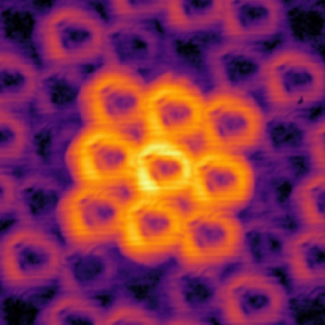
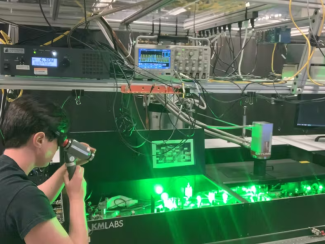
A new article in CU Boulder Today highlights a recent paper published in a special issue of Optics & Photonics News called Optics in 2023 when JILA Fellows and University of Colorado Professors Margaret Murnane and Henry Kapteyn and their groups use ultraprecise light to image nanosurfaces. 

Press Clipping: JILA's Breakthrough in Spin Dynamics Featured in Laser Focus World

Submitted by Kenna Hughes-C… on

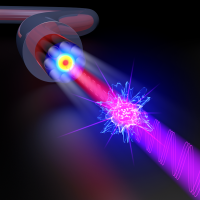
In a pioneering study, researchers from JILA and the University of Colorado Boulder physics department, have made significant strides in understanding electron spin dynamics within metals. The feature article in Laser Focus World highlights their work on high-harmonic generation (HHG) light probes and their use in revealing spin dynamics within a Heusler compound.