WELCOME! to the class website for ASTR 5820, Origin and Evolution of Planetary Systems. We will be meeting during the Spring semester on Tuesday and Thursday in Duane E126, 12:30-1:45pm. The goal of the class is to give an overview of the theory of planet formation, and how it relates to extrasolar planetary systems. The scope covers four main areas:
(1) Introduction to the Solar System and
extrasolar planetary systems
(2) Structure and evolution of protoplanetary disks
(3) Planet formation: starting from dust, then planetesimals, terrestrial and
giant planets
(4) Planetary system evolution: migration and dynamical stability
SYLLABUS: ASTR 5820 syllabus
PROBLEM SETS:
NOTES: Lecture notes on planet formation
TEXTBOOKS
None of these are required:
Astrophysics of planet formation: my own book, I have some free copies so don't buy this yet
Exoplanets: a collection of reviews, most of them excellent (the rest are merely good)
Solar system dynamics: a definitive reference
Planetary sciences: for our purposes this is mostly for background, but useful in other classes
CODES
REBOUND (this is the most full-featured and modern code, written by Hanno Rein)
MERCURY (fortran, written by John Chambers)
Swifter (this is a rewritten version of Hal Levison's SWIFT code, with similar functionality to MERCURY. It is used for many research projects, but I don't have personal experience with it.)
REVIEW ARTICLES
Protoplanetary disks and their evolution (Williams and Cieza 2011)
Dynamics of protoplanetary disks (Armitage 2011)
Planet-disk interaction and orbital evolution (Kley and Nelson 2012)
The growth mechanisms of macroscopic bodies in protoplanetary disks (Blum and Wurm 2008)
Forming planetesimals in solar and extrasolar nebulae (Chiang and Youdin 2010)
Dust evolution in protoplanetary disks (Testi et al. 2014)
Transport and accretion in planet-forming disks (Turner et al. 2014)
The multifaceted planetesimal formation process (Johansen et al. 2014)
Terrestrial planet formation at home and abroad (Raymond et al. 2014)
Giant planet formation, evolution, and internal structure (Helled et al. 2014)
The long-term dynamical evolution of planetary systems (Davies et al. 2014)
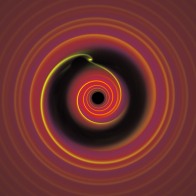
Interaction between a giant planet and the protoplanetary disk